The Chemistry of Switching: Vape Ingredients vs. Cigarette Smoke

Every mainstream media article warns you about "chemical toxins in vapes," yet they rarely mention the exact molecular science. For adult smokers trying to quit tobacco, this lack of context creates unnecessary panic. Is vaping perfectly safe? No. But from a toxicological standpoint, comparing the aerosol of a controlled e-cigarette to the smoke of burning tobacco is like comparing boiling water to a coal plant emission.
To truly understand harm reduction, we have to look past the scary headlines and dive deep into the chemical transformations that happen inside your device versus a cigarette.
💡 High-Fact Summary: The Chemical Reality
- Combustion vs. Thermolysis: Cigarettes burn at up to 900°C, spawning 7,000+ chaotic byproducts. Vapes operate via controlled vaporization under 260°C, preventing thermal breakdown when engineered properly.
- The Heavy Metal Myth: Heavy metals in vapor are not in the e-liquid; they are the result of electrochemistry and "dry burn" erosion on sub-par coils.
- Nicotine Form Matters: Nicotine salts utilize organic acids to lower pH, making them bioavailable without the aggressive alkaline throat hit of traditional freebase nicotine.
The Molecular Chaos of 900°C Combustion
When you light a cigarette, you trigger pyrolysis—the irreversible thermal decomposition of organic material. Because a cigarette tip burns erratically between 600°C and 900°C, the chemical reactions are unpredictable and incredibly destructive.
This thermal frenzy shatters the tobacco plant matter, recombining atoms into over 7,000 compounds. The real danger lies in the non-nicotine byproducts:
- Particulate Matter (Tar): This isn't a single chemical, but a sticky polymer of thousands of high-molecular-weight compounds that permanently gum up lung alveoli.
- Volatile Carbon Monoxide (CO): A gas that aggressively displaces oxygen in your hemoglobin, spiking cardiovascular strain.
- Polycyclic Aromatic Hydrocarbons (PAHs): Complex ring-shaped carbon molecules directly linked to DNA mutation.
Choose Scientifically Engineered Vape Hardware
Don't compromise your transition with unstable, cheap hardware that risks thermal degradation. Explore our professional collection of high-puff disposables built with dynamic mesh coil architectures, stable voltage chipsets, and certified pure USP-grade nicotine ingredients.
Browse Lab-Tested DevicesDeep Dive into E-Liquid Chemistry: The Truth About the 4 Ingredients
Unlike tobacco smoke, high-quality nicotine vape aerosol is not a product of chemical decomposition. It is a physical state change—turning a liquid mixture into a gas via a heating element. Let's look at the true pharmaceutical specs of what is inside:
1. Vegetable Glycerin (VG) & Propylene Glycol (PG)
These carrier liquids form the base. Pure VG and PG have boiling points of 290°C and 188°C respectively. When sourced as USP (United States Pharmacopeia) Grade, they are 99.7% pure. In an optimal temperature window, they atomize smoothly without changing their chemical identity.
2. Freebase Nicotine vs. Nicotine Salts
Standard tobacco cigarettes deliver nicotine in an alkaline "freebase" state, which hits the bloodstream instantly but can be harsh on the throat. Modern vapes often use Nicotine Salts (Nic Salts). By adding an organic acid (like benzoic or salicylic acid) to freebase nicotine, scientists lower the pH level. This molecular modification allows for rapid, cigarette-like neural absorption at lower temperatures, without tearing up your throat.
3. The Flavor Matrix: Avoiding Diketones
The "flavor chemicals" in e-cigarettes are highly concentrated food-grade esters. The industry historical pain point was Diacetyl (linked to lung inflammation when inhaled). Today’s premium manufacturers explicitly ban diacetyl, as well as its sneaky cousins Acetyl Propionyl and Acetoin, keeping the inhalation profile clean.
| Chemical Vector | Cigarette Smoke (Combustion) | Premium Nicotine Vape (Vaporization) |
|---|---|---|
| Peak Thermal Output | 600°C - 900°C | 180°C - 260°C (Below degradation thresholds) |
| Carbon Monoxide (CO) | Extremely High (>400 ppm per puff) | Undetectable / Zero |
| Carbonyls (Formaldehyde) | Massive yields from burning plant sugars | Traces only if the device is overheated (Dry Hit) |
| Heavy Metal Transfer | Cadmium and Polonium-210 absorbed from soil | Zero from e-liquid; trace coil wear only in low-end hardware |
Where Vaping Risks Hide: The Science of Overheating
To maintain full transparency, we must address how hazardous chemicals can occasionally appear in vapes. If a device is poorly made, it risks entering a zone called thermal degradation.
If the wicking material runs dry, or if the battery feeds unstable voltage to a cheap coil, temperatures can spike past 300°C. When this happens, PG and VG break down into harmful carbonyls: Formaldehyde, Acetaldehyde, and Acrolein. This is what vapers know as a "dry hit"—it tastes terrible because you are tasting thermal degradation.
Furthermore, trace heavy metals (like nickel or chromium) can leach into vapor, but only if low-grade wire coils experience galvanic corrosion due to poor engineering or acidic e-liquids.
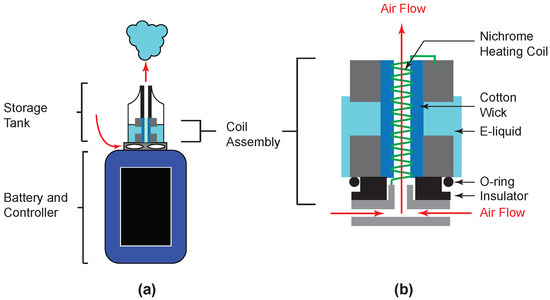 Analysis of the High-End Mesh Coil Constant-Temperature Heating Surface and Anti-Dry-Burn Mechanism
How Advanced Hardware Lock Out Thermal Degradation
Because chemical byproducts are strictly a function of temperature control, modern vaping engineering has heavily pivoted toward safety hardware. High-puff disposable systems and premium vape lines now mitigate these risks through advanced material science:
- High-Surface-Area Mesh Coils: By replacing legacy wire coils with ultra-thin metallic mesh structures, devices distribute heat evenly across the e-liquid matrix. This eliminates the "hot spots" that trigger chemical cracking of PG/VG.
- Food-Grade PCTG Shells: Poly(cyclohexylenedimethylene terephthalate glycol) ensures the e-liquid chamber remains completely inert, meaning zero chemical leaching or structural warping under prolonged heat exposure.
- Smart Voltage Regulation: Quality chipsets deliver a stable, declining voltage curve as the battery drains, ensuring the coil never receives a catastrophic spike in current that could scorch the e-liquid.
Choose Scientifically Engineered Vape Hardware
Don't compromise your transition with unstable, cheap hardware that risks thermal degradation. Explore our professional collection of high-puff disposables built with dynamic mesh coil architectures, stable voltage chipsets, and certified pure USP-grade nicotine ingredients.
Browse Lab-Tested DevicesConclusion: The Practical Metric of Harm Reduction
No health authority claims that inhaling vaporized flavoring is better than breathing pure mountain air. However, for a current smoker hooked on nicotine, the chemical contrast is overwhelming. By swapping out a toxic combustion delivery mechanism that floods your body with tar and carbon monoxide for a regulated, sub-300°C vaporization device, you drastically alter your chemical exposure. To keep that risk as low as scientifically possible, stick to transparent, lab-tested hardware manufacturers.